
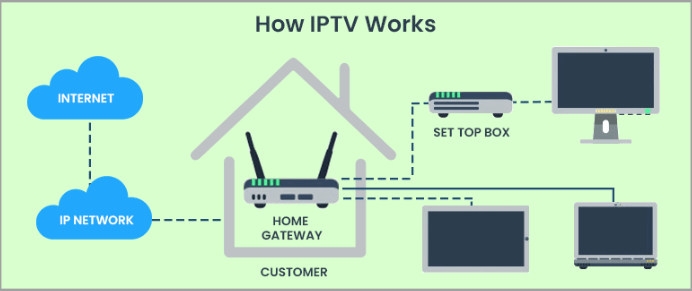
How does IPTV work to deliver live television, movies, and shows directly to your device? If you’ve been curious about this, you’re in good company! IPTV—short for Internet Protocol Television—revolutionizes our viewing habits by streaming content over the internet instead of relying on traditional cables or satellites. Let’s explore in simple terms how IPTV works, uncover its essential components, and understand the key factors that affect your viewing experience.
Table of Contents
The Basics of How Does IPTV Work
How does IPTV work? At its core, it involves converting traditional video broadcast signals into a digital format that can be transmitted through the internet. Instead of sending signals through antennas or coaxial cables, IPTV breaks down TV content into small pieces called data packets, which travel across the internet using powerful network infrastructure.
Imagine sending a letter: instead of sending one large parcel, you send many tiny packets. When these packets arrive at your device, they’re reassembled and decoded to display your favorite show. This entire process explains how IPTV works—from the content source to your screen.
Step-by-Step: How IPTV Delivers Content to You
Here’s a simplified flow of how IPTV works:
- Content Source: This could be live channels like sports and news or pre-recorded videos like movies stored on servers.
- Encoding & Transcoding: Raw videos are compressed into efficient formats such as H.264 or H.265, reducing size while maintaining quality. Different versions of the same video are created for adaptive streaming—allowing the video quality to switch based on your internet speed.
- Distribution via Servers & CDN: The content is stored on powerful origin servers, while Content Delivery Networks (CDNs) cache copies of the content closer to viewers to reduce delays and buffering.
- Middleware & Management: This acts as the brains of the operation, managing user accounts, channel lists, electronic program guides (EPG), and access permissions.
- Your Device & Playback: Once the stream reaches your device—be it a smart TV, smartphone, or set-top box—the app downloads the data, decodes it, and displays it as seamless video.
What Are the Main Components That Make How does IPTV work Possible?
Content Sources & Ingestion 🎥
This is where the whole process begins. Live streams like sports events or news broadcasts are captured and fed into the system instantly. Simultaneously, Video on Demand (VOD) libraries—such as movies or TV shows—are stored on servers for flexible viewing anytime.
Encoding & Transcoding ⚙️
Since raw video files are huge, encoding compresses them into smaller, efficient formats like H.264. Transcoding further creates multiple quality versions to enable adaptive streaming, giving viewers a smooth experience regardless of their internet speed.
Middleware & Management 🧭
Middleware acts as the control center—managing user rights, channel lineups, program schedules, billing, and permissions. When you select a channel or a show, middleware determines the correct stream URL and manages features like catch-up TV or recording options.
Distribution: Servers & Content Delivery Networks (CDNs) 🌐
Content stored on origin servers is distributed via CDNs, which cache content closer to your location. This ensures faster access, less buffering, and smoother playback, especially during crowded live events.
How do Streaming Protocols & Playlists Play a Role?
How does IPTV work seamlessly thanks to modern streaming protocols like HLS (HTTP Live Streaming) and DASH. These protocols split videos into small, manageable chunks, which are requested sequentially by your device. This method allows video quality to adjust dynamically based on your bandwidth, preventing annoying buffering pauses.
Playlists—usually in M3U format—list all available channels and streams, while electronic program guides (EPG) give you schedules and program information, making navigation easier.
The Device You Use & Playback: How does IPTV work on your Screen
Once the content arrives at your device—a smart TV, smartphone, or set-top box—your IPTV application downloads the segmented data, decodes it, and displays the video with sound and subtitles. The device’s hardware capabilities determine how well the stream performs — whether it’s ultra-high-definition 4K quality or lower resolutions optimized for older gadgets.
Factors That Influence How does IPTV work for Your Viewing Experience
Several factors impact how IPTV works:
- Bandwidth: Watching high-quality HD or 4K content needs a fast internet connection. Insufficient bandwidth causes buffering and quality reduction.
- Latency: Especially relevant for live events, latency refers to the delay between real-time broadcast and what you see. Reducing this delay requires specialized setups.
- Server & CDN Quality: Overloaded or poorly maintained infrastructure leads to interruptions or lag.
- Device Performance: Older or less powerful devices might struggle to decode high-bitrate streams or newer codecs.
- Network Stability: WiFi interference, ISP throttling, or network congestion can harm streaming quality.
Is IPTV Secure & Legal?
It’s essential to understand that how does IPTV relate to legality. IPTV services can be either licensed and legit or unlicensed and illegal. Accessing unlicensed IPTV streams can lead to unstable viewing, malware risks, and legal issues.
For a safe experience, always choose licensed providers and verify their credibility. Protect your privacy by using secure connections and staying informed about copyright laws in your region.
Wrapping Up: The Key to How IPTV Works
So, how does IPTV work? It all comes down to converting traditional TV signals into digital data, managing access through sophisticated systems, and distributing the content efficiently via servers and CDNs. Your device then receives this data, which is decoded and played back smoothly thanks to adaptive streaming protocols.
The quality and reliability of IPTV depend heavily on content encoding, infrastructure quality, your internet bandwidth, and the capabilities of your device. As the technology evolves, IPTV continues to offer richer features, higher quality streams, and more interactive viewing experiences — truly changing the way we consume entertainment.